Self-Shaping Modules Pave the Way for Mega-Space Observatories
Summary:
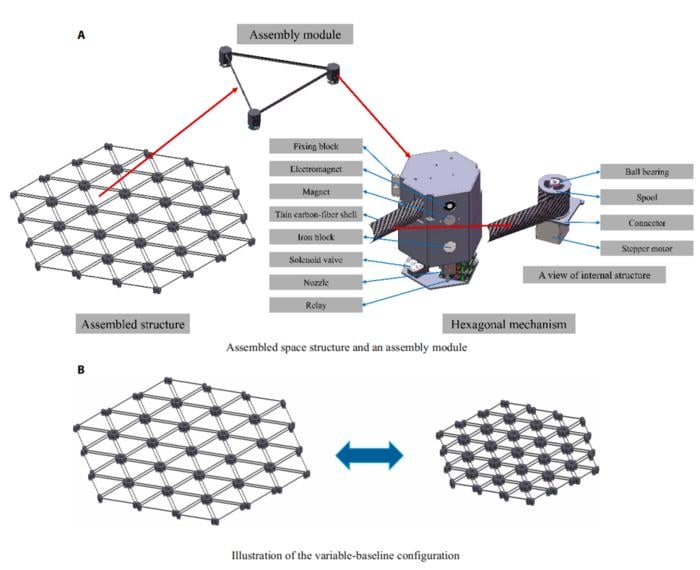
As private space companies continue to push the boundaries of what's possible in space, a new innovation could unlock the door to unprecedented opportunities in astronomy and beyond. Researchers at Nanjing University of Aeronautics and Astronautics and the Beijing Institute of Te...
As private space companies continue to push the boundaries of what's possible in space, a new innovation could unlock the door to unprecedented opportunities in astronomy and beyond. Researchers at Nanjing University of Aeronautics and Astronautics and the Beijing Institute of Technology have developed a self-shaping, deployable module that can adjust its size and position in orbit, paving the way for mega-observatories that could revolutionize our understanding of the universe. The Human Dimension For astronomers, this breakthrough means that future generations of telescopes and observatories could be designed with unprecedented flexibility and precision. No longer will they be limited by the constraints of traditional fairing sizes, which can restrict the size and shape of their instruments. This could lead to more accurate observations, better data collection, and groundbreaking discoveries. For example, a deployable module could be used to create a large-scale interferometer, allowing scientists to study distant galaxies in unprecedented detail. Furthermore, this technology could also enable the creation of large-scale solar power satellites, which could provide clean energy to remote communities around the world. What This Means Going Forward In the coming years, we can expect to see a surge in innovation around deployable modules for space exploration. As companies like SpaceX and Blue Origin continue to develop their capabilities, we can expect to see new applications for this technology emerge. For students and researchers interested in pursuing careers in space exploration or astronomy, this breakthrough offers new opportunities for collaboration and discovery. Additionally, as the world becomes increasingly reliant on space-based technologies for communication, navigation, and environmental monitoring, this innovation will play a critical role in shaping our collective future. As we look up at the stars, we're reminded that there's still so much we don't know about our universe. The development of self-shaping modules is a crucial step towards unlocking its secrets. With its potential to enable new discoveries, drive innovation, and improve lives around the world, this breakthrough is an exciting reminder that humanity's reach is limitless – and just beginning to extend into space itself.