Nobel laureates Hall and Woodford pave the way for economic stability
Summary:
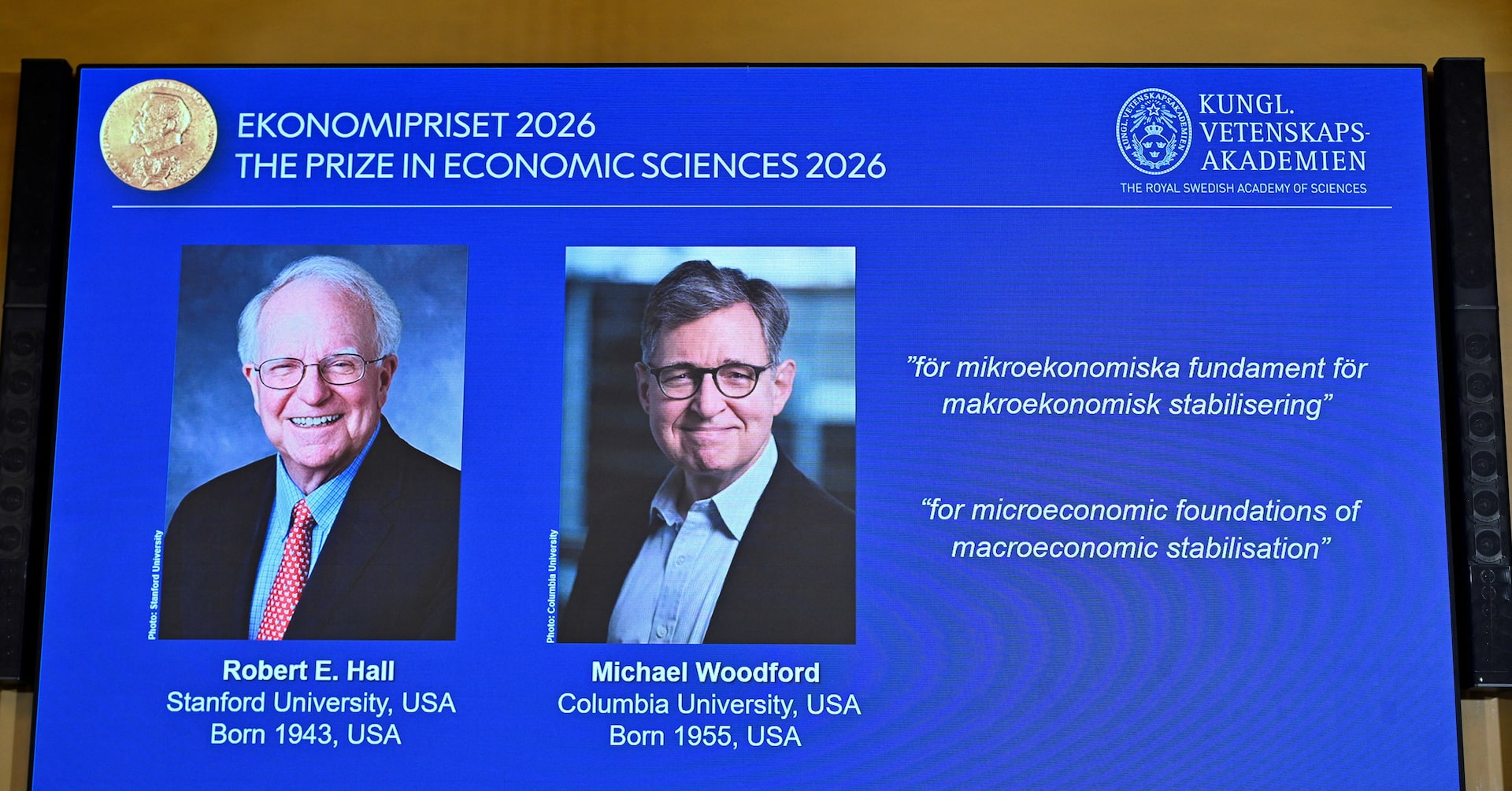
The 2026 Nobel economics prize has been awarded to US academics Robert Hall and Michael Woodford for their pioneering work on developing models to stabilise economies. Over several decades, Hall and Woodford have contributed significantly to the development of ground-up models cu...
The 2026 Nobel economics prize has been awarded to US academics Robert Hall and Michael Woodford for their pioneering work on developing models to stabilise economies. Over several decades, Hall and Woodford have contributed significantly to the development of ground-up models currently used by central banks and finance ministries across the world. These models aim to improve economic forecasting, policy-making, and crisis management, ultimately benefiting millions of people worldwide. The Human Dimension The impact of Hall and Woodford's work extends far beyond academic circles. For individuals, families, and communities, economic stability means having access to steady employment, affordable healthcare, education, and basic necessities. When economies are stable, people can plan for the future with greater confidence. Small business owners can invest in their ventures, entrepreneurs can pursue innovative ideas, and workers can expect a steady income. The ripple effect of economic stability is profound: families can afford better healthcare, students can access quality education, and communities can thrive. In practical terms, Hall and Woodford's work has improved our understanding of how economies respond to shocks such as recessions or natural disasters. This knowledge enables policymakers to design more effective interventions, reducing the risk of widespread job losses or social unrest. By fostering economic stability, governments can create an environment that encourages entrepreneurship, innovation, and growth – essential drivers of human progress. What This Means Going Forward As we look ahead to the coming months, readers should be aware of the potential implications of Hall and Woodford's work on economic policy-making. Central banks and finance ministries may refine their models to better address emerging challenges such as climate change or technological disruption. Policymakers may also place greater emphasis on promoting financial inclusion, ensuring that all segments of society have access to affordable credit and financial services. For individuals seeking career advancement or entrepreneurship opportunities, understanding the principles behind Hall and Woodford's work can be invaluable. By grasping the fundamental drivers of economic stability, professionals in fields such as economics, finance, or public policy can make more informed decisions about investments, job prospects, or business strategies. As we celebrate the achievements of Hall and Woodford, it is essential to remember that their work is not just an intellectual exercise; it has real-world implications for people's lives. By promoting economic stability, we can create a brighter future for ourselves and our communities – one where everyone has access to opportunities for growth and prosperity.