Unraveling the Mystery of Jumping Genes: A New Breakthrough in Gene Regulation
Summary:
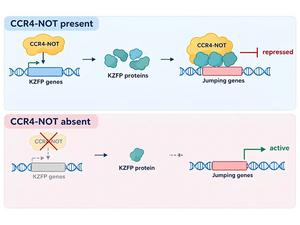
The scientific community has made a groundbreaking discovery in the field of gene regulation, shedding light on the complex mechanisms that govern the activity of jumping genes, also known as transposable elements. Researchers at Penn State University have identified a new role f...
The scientific community has made a groundbreaking discovery in the field of gene regulation, shedding light on the complex mechanisms that govern the activity of jumping genes, also known as transposable elements. Researchers at Penn State University have identified a new role for the CCR4-NOT protein complex, revealing its ability to suppress the activity of these mobile genetic elements. The Human Dimension
The implications of this discovery are far-reaching and have significant consequences for our understanding of gene regulation and its impact on human health. Jumping genes are known to contribute to various diseases, including cancer and neurological disorders. By suppressing their activity, the CCR4-NOT complex plays a crucial role in maintaining genome stability and preventing genetic mutations. This breakthrough has significant implications for the development of novel therapeutic strategies for treating diseases associated with jumping gene activity. For workers in the field of biotechnology and genetic research, this discovery opens up new avenues for exploring the regulation of gene expression. Understanding how jumping genes are controlled can lead to the development of more effective gene editing tools, such as CRISPR-Cas9, which rely on precise control over gene expression. Additionally, this research has implications for the development of novel treatments for diseases caused by jumping genes. What This Means Going Forward
In the coming weeks and months, researchers will likely focus on elucidating the mechanisms by which CCR4-NOT regulates jumping gene activity. This knowledge can be used to develop novel therapeutic strategies for treating diseases associated with jumping gene activity. For patients and families affected by these diseases, this breakthrough offers new hope for effective treatment options. Furthermore, this research highlights the importance of continued investment in basic scientific research, which can lead to significant advances in our understanding of human health and disease. As we continue to unravel the mysteries of gene regulation, we are reminded of the intricate complexity of human biology and the importance of continued scientific inquiry into the underlying mechanisms that govern our health.