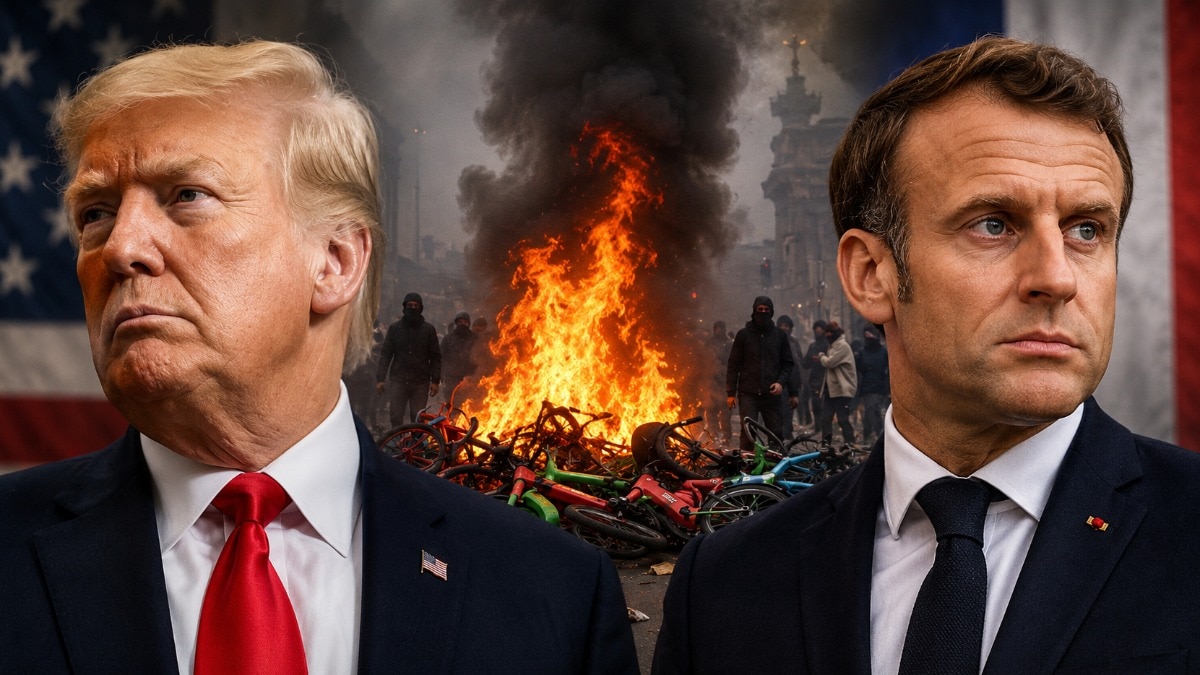
US President Trump's immigration remarks spark global unease amid France's unrest
Summary:
The streets of France have become a battleground, with violent protests erupting in response to the country's economic and social woes. Amidst the chaos, US President Donald Trump weighed in, linking the unrest to French President Emmanuel Macron's immigration policies. Trump cla...
The streets of France have become a battleground, with violent protests erupting in response to the country's economic and social woes. Amidst the chaos, US President Donald Trump weighed in, linking the unrest to French President Emmanuel Macron's immigration policies. Trump claimed that Paris would soon become a Muslim city, drawing widespread criticism from world leaders and experts alike. The Human Dimension
In reality, the riots in France are a complex issue that cannot be reduced to simplistic blame-shifting. The violence is a symptom of deeper social and economic problems that affect millions of people. Unemployment, poverty, and inequality have pushed many French citizens to the brink, fuelling anger and frustration. Students, workers, and families are among those most affected by the unrest. The economic cost of the riots is already mounting, with businesses forced to close and tourists staying away. As the world watches the crisis unfold, it's essential to remember that these events have far-reaching implications for ordinary people. The curfews imposed by the French government will inevitably disrupt daily life for residents and visitors alike. For students, this means disrupted education and learning; for workers, it means lost income and economic uncertainty; for families, it means concern about safety and well-being. What This Means Going Forward
As tensions in France continue to simmer, it's crucial to look beyond the headlines and examine the underlying causes of the unrest. The global community must recognize that economic inequality, social exclusion, and lack of opportunities are not unique to France. These issues affect communities worldwide, from urban ghettos to rural areas. By acknowledging this shared human stake, we can work towards finding solutions that address the root causes of discontent. In practical terms, individuals can stay informed about global events and their impact on local communities. They can also engage in constructive dialogue with others, listening to diverse perspectives and fostering empathy. By doing so, we can build bridges across cultures and borders, promoting understanding and cooperation in times of crisis. In conclusion, as the world grapples with France's unrest, we must prioritize humanity over ideology or politics. By focusing on shared concerns and aspirations, we can work towards creating a more just and equitable world – one where people can thrive regardless of their background or circumstances.